Sleep apnea affects an estimated 30 million adults in the United States, and for most of them a continuous positive airway pressure (CPAP) machine is the single most effective treatment. But with dozens of models on the market—and prices ranging from $500 to well over $2,000—choosing the best CPAP machine for your needs can feel overwhelming.
To save you the research, we compared the leading CPAP and APAP machines on the specifications that actually matter: pressure range, noise level, humidification, portability, data tracking, and price. Below are our top three picks for 2026, followed by a side-by-side comparison table and a plain-English buying guide.
A Quick Look at Our Top Picks
After careful comparison, our top picks for the best CPAP machines in 2026 are:
- ResMed AirSense 11 AutoSet — Best Overall (tech-savvy, auto-adjusting)
- ResMed AirMini AutoSet — Best Travel / Micro CPAP
- ResMed AirSense 10 AutoSet — Best Value
Each of these CPAP devices offers unique advantages for different sleepers. Note that CPAP machines require a valid prescription in the United States—see the prescription section below.
Best CPAP Machines Compared
| Machine | Best For | Type | Weight | Noise | Humidifier |
|---|---|---|---|---|---|
| ResMed AirSense 11 AutoSet | Best overall | APAP (auto) | 2.5 lbs | 27 dB | Integrated heated |
| ResMed AirMini AutoSet | Travel / micro CPAP | APAP (auto) | 0.66 lbs | ~30 dB | Waterless (HME) |
| ResMed AirSense 10 AutoSet | Best value | APAP (auto) | 2.75 lbs | 26.6 dB | Integrated heated |
ResMed AirSense 11 AutoSet CPAP: Best Overall
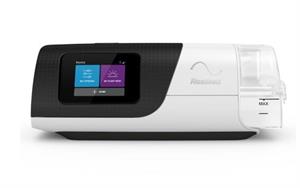
MSRP: $2,253.00 (frequently discounted—check current price)
Check Latest Price: ResMed AirSense 11
Specifications:
- Dimensions: 10.21" x 3.72" x 5.45"
- Weight: 2.5 lbs
- Noise level: 27 decibels
- Pressure range: 4–20 cm H2O
The ResMed AirSense 11 AutoSet is our pick for the best CPAP machine overall. As an automatic positive airway pressure (APAP) device, it continuously adjusts pressure breath-by-breath to match your needs—so you get effective therapy for obstructive sleep apnea without manual tinkering.
Standout features include auto-adjusting pressure, an integrated heated humidifier, and myAir app connectivity so you can track your sleep data and therapy compliance from your phone. At just 27 decibels it is quiet enough for most partners to sleep through, and it is compatible with essentially every ResMed mask.
Pros:
- Auto-adjusting pressure for personalized therapy
- Integrated heated humidifier and optional heated tubing
- Low 27 dB noise level
- myAir app with compliance reporting
- Compatible with all ResMed masks
Cons:
- Higher price point than older models
- Humidifier requires distilled water and regular cleaning
ResMed AirMini AutoSet Travel CPAP: Best Micro / Travel CPAP
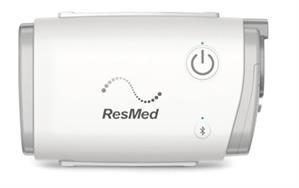
MSRP: $1,099.00 (check current price)
Check Latest Price: ResMed AirMini
If you are searching for the best micro CPAP machine or a travel unit, the ResMed AirMini AutoSet is the one to beat. Weighing just 0.66 lbs and measuring 5.4" x 3.3" x 2.1", it is one of the smallest full-featured CPAP machines you can buy—it fits in a jacket pocket yet still delivers true auto-adjusting APAP therapy.
Specifications:
- Weight: 0.66 lbs
- Dimensions: 5.4" x 3.3" x 2.1"
- Waterless HME humidification
- Auto-adjusting (APAP) pressure
- FAA compliant for in-flight use
Pros:
- Pocket-sized—ideal for travel and small spaces
- Waterless humidification (no tank to fill or spill)
- AirMini app with 30 days of on-device sleep data
- Built-in converter for international travel; FAA compliant
Cons:
- Only compatible with select ResMed masks
- No integrated battery (needs a power source or add-on battery)
- Slightly louder than a full-size AirSense
ResMed AirSense 10 AutoSet CPAP: Best Value
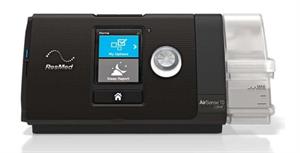
MSRP: $1,199.99 (frequently on sale—check current price)
Check Latest Price: ResMed AirSense 10
The ResMed AirSense 10 AutoSet remains the best-value CPAP machine in 2026. It is the model many sleep clinics have relied on for years, and it is now frequently discounted well below the newer AirSense 11 while delivering the same core auto-adjusting therapy.
Specifications:
- Dimensions: 10" x 4.6" x 5.9"
- Weight: 2.75 lbs
- Noise level: 26.6 decibels
- AutoRamp with expiratory pressure relief (EPR)
Pros:
- Proven, clinic-favorite reliability
- Very quiet (26.6 dB) with a built-in humidifier
- AutoRamp helps you fall asleep comfortably
- Often the lowest price of the three
Cons:
- Card-to-Cloud version stores data on an SD card only (no built-in cloud)
- Larger footprint than the AirMini
Do You Need a Prescription for a CPAP Machine?
Yes. In the United States a CPAP or APAP machine is a Class II medical device, so you need a valid prescription from a licensed provider to purchase one. If you have been diagnosed with sleep apnea after a sleep study, your doctor can write the prescription; reputable retailers will ask you to upload it before shipping. If you suspect you have sleep apnea but have not been tested, start with an at-home or in-lab sleep study.
CPAP vs. APAP vs. BiPAP: Which Do You Need?
All three deliver pressurized air to keep your airway open, but they differ in how that pressure is applied:
- CPAP delivers one fixed pressure all night. Simple and effective for straightforward obstructive sleep apnea.
- APAP (what all three machines above are) automatically raises and lowers pressure within a range as your needs change. This is the most comfortable choice for most people and adapts to position, weight changes, and alcohol.
- BiPAP uses two pressures—higher on inhale, lower on exhale. It is prescribed for people who need high pressures, have central sleep apnea, or cannot tolerate exhaling against a single CPAP pressure.
Choosing the Right CPAP Machine for You
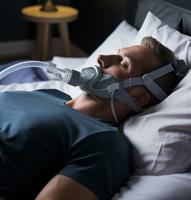
Once you have a prescription, weigh these factors when choosing a machine:
Key Specifications to Compare
- Pressure range: typically 4–20 cm H2O. Make sure the machine covers your prescribed pressure.
- Noise level: most modern machines run around 26–30 decibels—quiet enough for a shared bedroom.
- Humidification: a heated humidifier (AirSense 10/11) reduces dryness; waterless HME (AirMini) is best for travel.
- Data tracking: app-connected models make it far easier to prove compliance to insurance.
- Mask compatibility: confirm your preferred CPAP mask works with the machine, especially with the AirMini.
Navigating Insurance Coverage
Many health plans cover CPAP therapy, sometimes through a rent-to-own arrangement with monthly payments. If you qualify, Medicare covers a three-month CPAP trial for sleep apnea; after that you demonstrate compliance (usage data from an app-connected machine helps here) to continue coverage. Coverage varies widely, so confirm the details with your insurer and healthcare provider before you buy.
Summary
For most people the best CPAP machine in 2026 is the ResMed AirSense 11 AutoSet for its auto-adjusting therapy and app connectivity. Frequent travelers should choose the pocket-sized ResMed AirMini, while budget-focused buyers get proven, quiet performance from the ResMed AirSense 10. Match the machine to your prescribed pressure and your lifestyle, and you will sleep—and breathe—better.
Frequently Asked Questions
Which brand is best for a CPAP machine?
ResMed and Philips Respironics are the two most trusted CPAP brands. Among current models, the ResMed AirSense 11 AutoSet is our Editor's Pick for its auto-adjusting therapy, quiet operation, and myAir app.
What is the best micro or travel CPAP machine?
The ResMed AirMini AutoSet is the best micro CPAP machine for most travelers. At 0.66 lbs it is one of the smallest APAP machines available, is FAA compliant for in-flight use, and uses waterless humidification so there is no tank to spill.
Do I need a prescription to buy a CPAP machine?
Yes—in the U.S. a CPAP machine is a prescription medical device. You will need a prescription from a licensed provider, typically after a diagnosed sleep study, and most retailers verify it before shipping.
Is there something better than a CPAP machine?
For obstructive sleep apnea, alternatives include other PAP devices such as BiPAP or ASV machines, oral appliances for mild cases, and positional therapy. For central sleep apnea, implantable nerve stimulation may be an option. The best choice depends on the type and severity of your apnea—discuss it with your doctor.
What is the average noise level of a CPAP machine?
Modern CPAP machines average around 26–30 decibels—roughly the sound of a soft whisper—so they are quiet enough for most shared bedrooms.
How does the AutoRamp feature work?
AutoRamp starts your therapy at a low, comfortable pressure and gradually increases it to your prescribed level once the machine detects you have fallen asleep, making it easier to drift off.
2026 Update
Reviewed and updated for 2026 with a new comparison table, prescription guidance, and a CPAP vs. APAP vs. BiPAP breakdown. See our latest anti-snoring guides and top-rated picks on the Snoring Hub homepage, or compare an overnight pulse oximeter to monitor your oxygen levels during therapy.